HP+
A wristband that teaches children healthy eating and hygiene through play. An Electrolux Design Lab 2015 semifinalist.
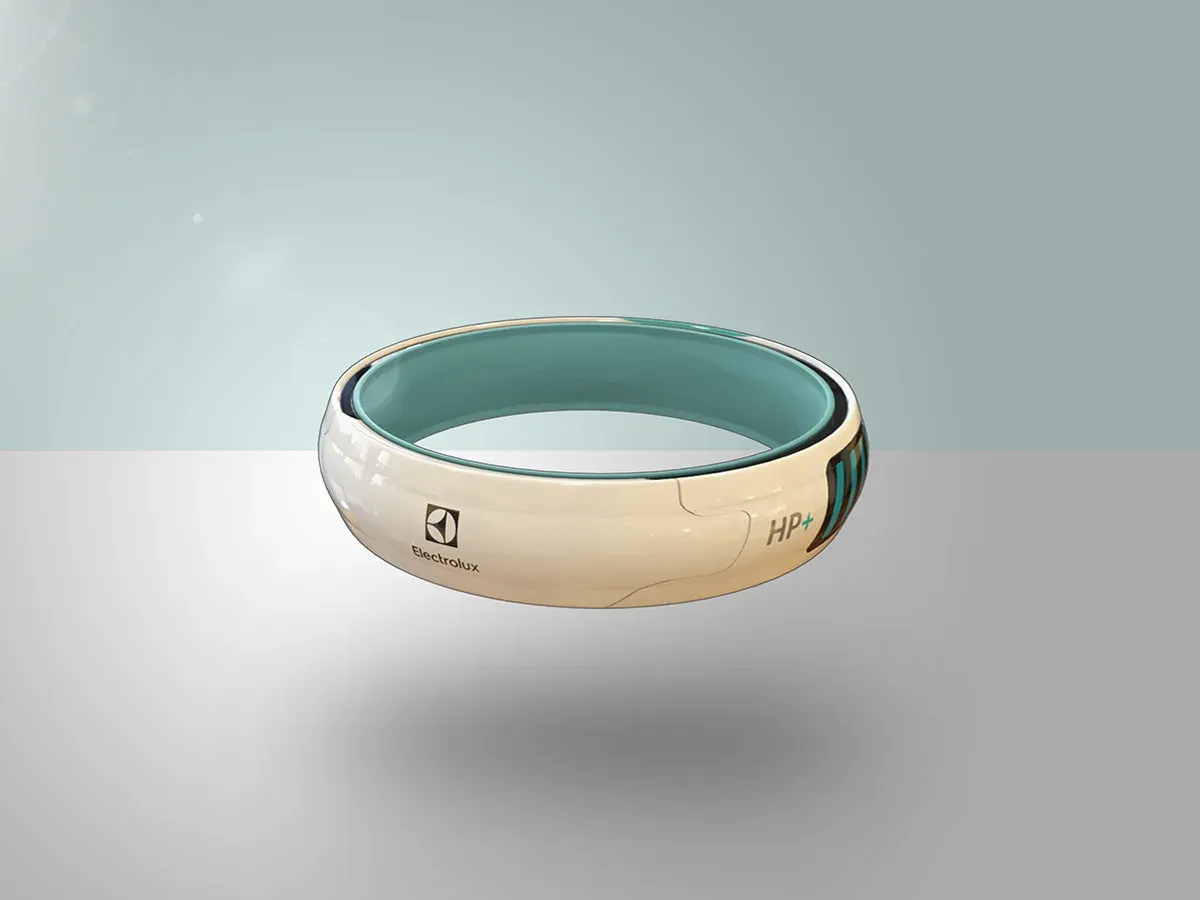
- Top 35Electrolux Design Lab 2015, semifinalist
- Yanko DesignFeaturedAlso Tuvie, and others listed in the deck
- 30 kids, 20 parentsSpoken to for the research
On this page
Are you raising a healthy and happy kid?
HP+ changes how healthy eating habits are passed to children. A wristband turns eating well and washing hands into a game the child wants to win, while parents, teachers and doctors stay in the loop through an app.
It was my entry for the Electrolux Design Lab 2015 competition, where it reached the World's Top 35. The idea started from a simple observation: children are drawn to games, so the game can be what teaches them.
Kids love to compete
Show the processWhat I learned
The research covered 30 children aged 4 to 8 and 20 parents, around a day in a child's life: dining, shopping, school, cooking and gaming.
What children showed
- Competition. Kids love to compete.
- Rewards. They love prizes and bonuses.
- Curiosity. A question mark pulls them in.
- Play. Games are their language, and multiplayer makes it social.
What parents said
- They worry about unhealthy eating habits.
- They want to make better choices easier when shopping and cooking.
- They want to connect with teachers and family doctors for suggestions.
One child, five moments
Show the processThe child
Khushi is seven, lively and competitive. I mapped dining, gaming, parenting, shopping, schooling and cooking around her.
A band that plays along
Pick a moment to see what the band does.
Healthy or not
The band identifies the type of food with the help of absorption spectroscopy and shows whether it is healthy. Eating well raises the child's HP+ score, and unhealthy food lowers it.
Washing hands
When a child tries to eat, the band projects holographic cartoon germs on the hand. They disappear when the hands are washed, which turns washing before meals into a habit.
Shopping and schooling
In shopping mode the band detects the object and shows a smiling or sad face as guidance for a healthy choice. At school, teachers can see the best HP+ scorer of the day and inspire the others.
Parents stay in the loop
The band keeps the parent updated on the child's food. The parent can set a task and a bonus, such as a glass of water for extra points.
The app for parents, teachers and doctors
Show the processThe app
Get notified, set a task, keep records and involve experts. Wireframes from the deck.
Three decisions that shaped it
What I chose, and what each choice cost.
A game instead of rules
- What we chose
- A score the child wants to raise, with prizes and a daily top scorer.
- What it cost
- A score can reward the number and not the habit, so parents set the tasks and the bonuses.
Keep the adults in the loop
- What we chose
- An app for parents, teachers and doctors, with notifications, tasks, records and expert advice.
- What it cost
- More for the adults to manage, so the app is built around four simple steps.
Make it wearable for a child
- What we chose
- A stretchable, cushioned silicone band, a glossy nylon casing and a long-life battery.
- What it cost
- A tough band had to stay comfortable, so the cushions keep the parts intact and the casing resists a child's energetic lifestyle.
- What followed
- The deck describes a sugar-based battery that lasts about a week, and a wireless dock that charges it and syncs the data.
Colours, materials and finishes
Show the processDetails
What's your colour?
Show the processColours
What I took from it
What this taught me about agents
A wearable that notices and nudges acts for the parent in a child's day. The question is how much it should decide.
- The band rewards and guides, and the parent sets the tasks. People stay in charge.
- Play is a gentler way to hand over a habit than a rule.